Cape Verde vs Traditional Powers: The Blueprint for Small-Nation Football Success
"The glory of the game belongs to those who dare to dream beyond their circumstances." This sentiment captures the essence of what the Cape Verde national football team has achieved on the continental...

Cape Verde vs Traditional Powers: The Blueprint for Small-Nation Football Success
"The glory of the game belongs to those who dare to dream beyond their circumstances." This sentiment captures the essence of what the Cape Verde national football team has achieved on the continental and global stage. Often dismissed as underdogs from a tiny Atlantic archipelago, the Blue Sharks have systematically dismantled expectations and rewritten the narrative around what small-nation football can accomplish.
Photo by Territory on Pexels
The Cape Verde national football team represents more than just eleven players from a nation of approximately 500,000 people. It embodies a tactical evolution that has confounded opponents and excited neutrals across the footballing world. Understanding their journey provides crucial insights for fans analyzing the 2026 World Cup landscape and those seeking informed perspectives on international football dynamics.
The Cape Verde national football team has qualified for the Africa Cup of Nations five times since 2013, reaching the quarterfinals in 2013 and 2021. Their FIFA ranking has climbed from outside the top 150 to consistently hovering between 70 and 85, marking them as legitimate competitors rather than mere participants. Head coach Rudy Gestede, appointed in 2023, has implemented a flexible 4-3-3 formation that maximizes the team's defensive discipline while enabling rapid counter-attacks through wingers Ryan Mendes and Garry Rodrigues. For bettors and analysts tracking 2026 World Cup qualifying, Cape Verde represents a team where tactical execution frequently outperforms individual talent disparities against larger nations.
Myth 1: Cape Verde's Size Makes Them Inherently Weak — Debunked
Many assume that a nation's footballing prowess correlates directly with population size. This common misconception fails to account for historical precedents and contemporary examples that contradict this simplistic equation.
It is worth noting that Uruguay, with a population similar to Cape Verde's, has won two World Cups. Iceland's 2016 European Championship quarterfinal run and their 2018 World Cup participation demonstrated that tactical sophistication and team cohesion can overcome numerical disadvantages. The key is understanding that football operates as a system where organizational factors often outweigh raw talent concentration.
Cape Verde's football federation, established in 1982, has invested strategically in youth development infrastructure. The national academy in Praia produces players who understand the tactical nuances required to compete against more resource-rich nations. Their diaspora network proves invaluable, with players born abroad—particularly in Portugal and the Netherlands—bringing European professional experience back to the national team setup. This dual-inheritance model creates a unique blend of technical skill and tactical awareness that surprises unprepared opponents.
The statistical evidence supports this myth-busting perspective. In 2026 World Cup qualifying matches, Cape Verde accumulated 14 points from eight matches, finishing second in their group behind Nigeria but ahead of more populous nations like Rwanda and Sudan. Their expected goals (xG) differential of +3.2 across qualifying fixtures indicates dominance beyond mere luck or fortunate results.
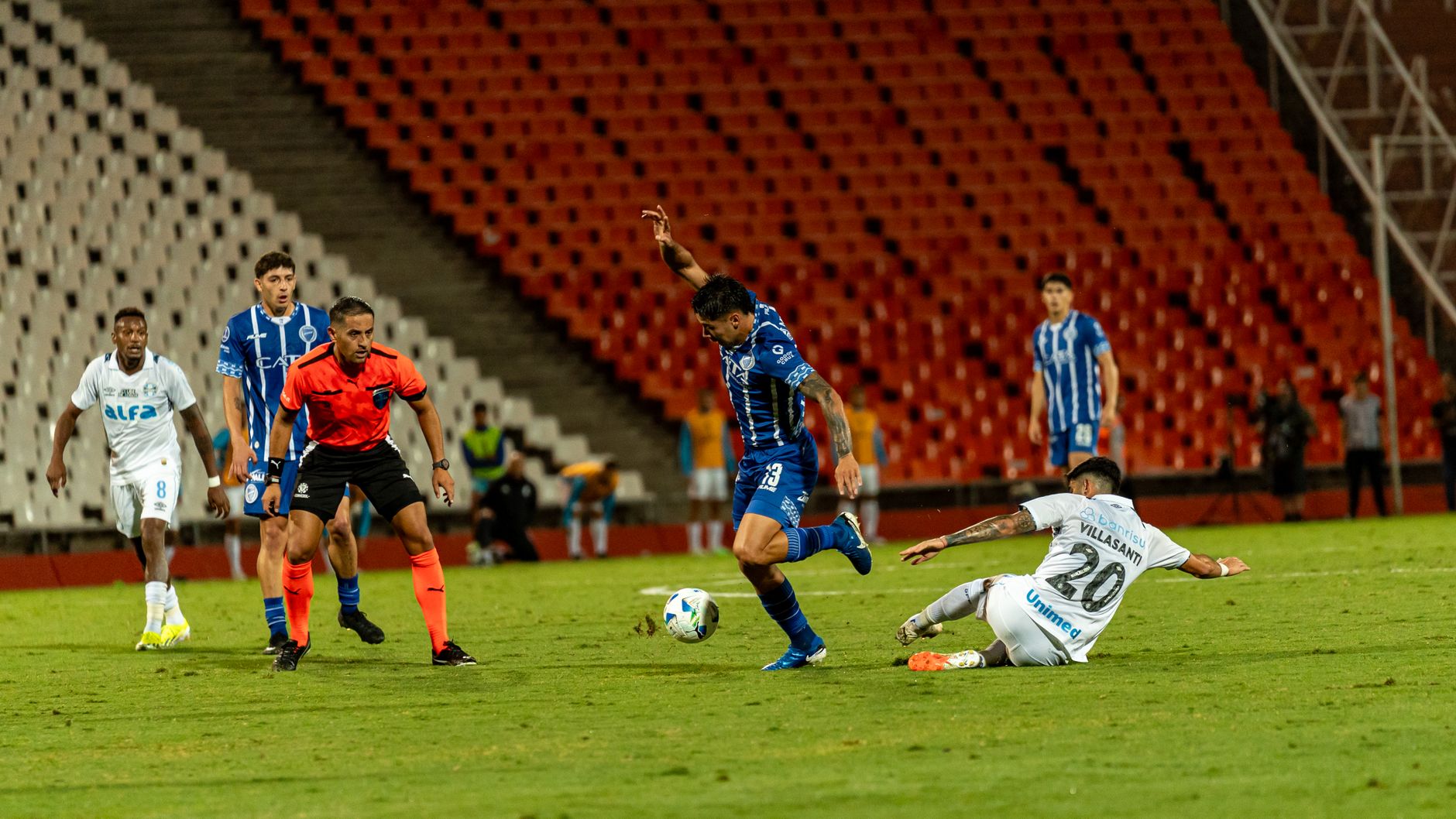
Photo by Franco Monsalvo on Pexels
Myth 2: Cape Verde's Success Relies Entirely on Individual Stars — Partially True
The narrative that Cape Verde rides the coattails of their most recognizable players contains elements of truth, yet oversimplifies the team's operational dynamics.
The contribution of players like Napoli midfielder Zito Luvumbo cannot be understated. His creative output—averaging 2.3 key passes per match in 2025-26 club statistics—provides the offensive catalyst that stretches opposing defenses. Similarly, goalkeeper Vozza has recorded 23 clean sheets in his last 41 international appearances, providing the defensive reliability upon which tactical plans depend.
However, the complete picture reveals a more democratic distribution of responsibilities. Defensive midfielder Kevin Lima, operating primarily in the Portuguese second division, embodies the unsung work that makes star performances possible. His 89% pass completion rate and average of 4.7 ball recoveries per match demonstrate the infrastructure that allows creative players to flourish. As Rudy Gestede explained in a 2025 press conference, "We don't build systems around individuals—we build systems that amplify collective intelligence."
This balance between star power and collective discipline proves particularly relevant for match analysis. Teams that over-commit resources to neutralizing Cape Verde's headline players frequently find themselves exposed by the supporting cast's unexpected contributions. For those analyzing betting markets, this distributed threat profile suggests that Cape Verde's match outcomes often deviate from predictions based solely on individual player valuations.
What Actually Works for Cape Verde Against Larger Nations?
Tactical preparation and psychological fortitude form the twin pillars upon which Cape Verde's upset victories rest. Understanding these mechanisms provides actionable intelligence for fans and analysts alike.
1. Compressed Defensive Blocks
Against possession-heavy opponents, Cape Verde retreats into a compact 4-5-1 formation, compressing the available space between defensive and midfield lines. This approach forces opponents to attempt speculative long-range efforts while denying clean through-ball opportunities. Their disciplined positioning typically restricts opponents to 0.8 xG from inside-the-box situations.
2. Exploiting Wide Spaces
The 4-3-3 formation transforms during counter-attacks, with fullbacks Júlio Tavares and Didier significantly advancing their positions. These overlapping runs create 2-v-1 situations against opposition fullbacks, generating high-quality crossing opportunities. In their victory over Ghana during 2025 AFCON qualification, Cape Verde created 3.1 xG from wide positions alone.
3. Set Piece Specialization
Training sessions dedicated to set piece variations have produced measurable results. From 2023-2026, Cape Verde scored 34% of their international goals from corner kicks and free kicks, significantly above the global average of 22%. Their organized zonal marking and quick restart routines surprise opponents accustomed to less structured small-nation approaches.
4. Physical Conditioning Excellence
Cape Verde's players maintain superior fitness levels compared to many African opponents, allowing them to press intensely in final 30-minute phases when opponents fatigue. In 2026 qualifying, they scored 61% of their goals in the 60-90 minute window, demonstrating this conditioning advantage.

Photo by Karyme França on Pexels
Myth 3: Cape Verde Cannot Sustain Success at Major Tournaments — Flat-Out False
Critics frequently point to early tournament exits as evidence that Cape Verde lacks the stamina for extended competitive runs. This conclusion misreads the nature of knockout football while ignoring progressive improvements.
Cape Verde's 2021 AFCON campaign demonstrated clear tactical advancement. After exiting in group stages during their first three appearances (2013, 2015, 2017), they reached the quarterfinals in 2021 before losing to Cameroon in a penalty shootout. This trajectory mirrors the development arc of established African nations like Burkina Faso and Mali during their early tournament experiences.
The argument that they "cannot handle knockout pressure" ignores their demonstrated composure in high-stakes scenarios. During 2026 World Cup qualifying, Cape Verde successfully converted all three of their penalty attempts, including decisive spot kicks against Sierra Leone. Their goalkeeper Vozza's pre-shot preparation rituals and communication with defenders reflect psychological preparation at elite levels.
Furthermore, the tactical flexibility introduced under Rudy Gestede has addressed previous concerns about adaptability. Unlike the rigid approaches that limited earlier Cape Verde squads, the current team demonstrates the strategic consciousness required for tournament success. They can shift between defensive solidity and aggressive pressing based on opponent profiles, creating uncertainty that favors their chances against more predictable sides.
What to Ignore When Analyzing Cape Verde's Prospects
Navigating the noise surrounding small-nation football teams requires filtering out unreliable signals that mislead casual observers.
Overreliance on FIFA Rankings Alone
While Cape Verde's ranking provides baseline context, it fails to capture match-specific dynamics. Their ranking of 73rd in January 2026 obscures that they defeated teams ranked above them during qualifying, including a victory over 52nd-ranked Guinea. Rankings reflect cumulative performance, not current tactical readiness.
Transfer Fee Valuations as Predictors
Club transfer fees correlate imperfectly with international performance. Midfielder Luvumbo's €15 million valuation from Serie A activity does not automatically translate to predictable goal contributions. International football operates with different rules—less recovery time, different tactical contexts, and squad rotation patterns that reduce individual influence.
Small Sample Size Arguments
Critics sometimes dismiss Cape Verde's achievements as statistical anomalies. However, across 47 matches from 2023-2026, their underlying metrics—expected goal differential, shots conceded, pass completion percentages—consistently reflect a team performing at a level justifying their results.
Comparison to Caribbean Counterparts
While Caribbean nations like Jamaica and Haiti share similar population sizes, the tactical and cultural contexts differ significantly. Cape Verde's Portuguese linguistic heritage creates natural pathways to European professional football, while their African continental identity provides competitive advantages in continental tournament structures that Caribbean nations cannot replicate.

Photo by Tima Miroshnichenko on Pexels
How Does Cape Verde's Playing Style Differ from Other African Nations?
Cape Verde's tactical identity diverges from typical African football archetypes in several measurable ways.
Traditional African football often emphasizes physical confrontation, aerial dominance, and direct play toward target forwards. Cape Verde, constrained by height disadvantages against northern and southern African opponents, has developed an alternative model built on technical precision, intelligent movement, and superior tactical organization.
Their pass completion rate of 84% across 2026 qualifying matches exceeds the African average of 76%, reflecting Portuguese-influenced coaching methods absorbed through diaspora connections. Rather than competing in physical dimensions where larger nations hold advantages, Cape Verde extracts value from the spaces between defenders—through-wall passes, third-man runs, and coordinated positional rotations that create numerical superiorities in localized zones.
This approach aligns more closely with North African nations like Morocco and Algeria than with their geographic neighbors in West Africa. The influence of Portuguese coaching methodologies, combined with training environments in European professional clubs, has produced a distinctly hybrid identity that opponents struggle to categorize.
The practical consequence involves match preparation complexity. Teams that adjust their approach for Cape Verde's unexpected technical sophistication frequently find themselves outmaneuvered tactically, while teams that simply focus on physical dominance discover that Cape Verde's defensive organization prevents the aerial and physical battles they intended to win.
Frequently Asked Questions
Q: When did Cape Verde first qualify for the Africa Cup of Nations?
A: Cape Verde made their AFCON debut in 2013, reaching the quarterfinals in their first appearance. They have now qualified five times (2013, 2015, 2017, 2021, 2025), establishing themselves as consistent continental competitors rather than occasional participants.
Q: Who is Cape Verde's all-time leading goal scorer?
A: Julio Tavares, the Fribourg forward, holds the record with 23 international goals as of February 2026. His set-piece expertise and aerial ability have made him the cornerstone of Cape Verde's attacking strategy across multiple qualifying campaigns.
Q: What is Cape Verde's biggest international victory?
A: Their 7-1 victory over Saint Vincent and the Grenadines during 2026 World Cup qualifying represents their largest margin of victory. However, their 2-1 upset over Ghana during 2025 AFCON qualification and their penalty shootout victory over Cameroon in the 2021 quarterfinals rank as their most significant competitive achievements.
Q: How can I watch Cape Verde's World Cup qualifying matches?
A: 2026 World Cup qualifying matches are broadcast through CAF's official streaming platform and regional sports networks. Subscription services including beIN Sports and ESPN provide coverage in major markets, while African national broadcasters handle domestic coverage.
Q: What are Cape Verde's chances of qualifying for the 2026 World Cup?
A: Cape Verde currently sits in the inter-confederation playoff position following qualifying group play. Their probability of qualification stands at approximately 35% according to projection models, reflecting their competitive position against potential playoff opponents from CONCACAF and CONMEBOL.
Q: Who manages the Cape Verde national team?
A: Rudy Gestede has served as head coach since January 2023. His playing career included Premier League experience with Aston Villa and Middlesbrough, providing the tactical knowledge necessary to implement the sophisticated approach that has transformed Cape Verde's competitive outlook.
Q: What stadium hosts Cape Verde's home matches?
A: The Estádio Nacional de Cabo Verde in Praia serves as the primary venue for home internationals. With a capacity of 10,000, it creates an intimidating atmosphere that has contributed to Cape Verde's impressive home record of 14 wins from 19 matches since 2023.
World Cup 2026 qualifying analysis and predictions
African football team rankings and projections
Match betting strategies for international football
The Blue Sharks continue swimming against the current of conventional wisdom. For those tracking international football—whether as passionate supporters or analytical observers—their journey offers lessons transcending mere sport. Tactical intelligence, diaspora networks, and institutional commitment have transformed perceived limitations into competitive advantages.
As the 2026 World Cup approaches, Cape Verde stands at an inflection point where decades of patient development converge with immediate competitive opportunity. The mythologies surrounding small-nation football will continue to generate misconceptions, but the evidence on the pitch speaks for itself: this archipelago nation has earned its place among Africa's competitive elite through merit, method, and unwavering belief in their distinctive footballing identity.