Inside FIFA: A 5-Step VAR Breakdown
Video Assistant Referee (VAR) is a football officiating system that helps the on-field referee correct a clear and obvious error or serious missed incident in four match-changing areas: goals, penalti...

Inside FIFA: A 5-Step VAR Breakdown
Video Assistant Referee (VAR) is a football officiating system that helps the on-field referee correct a clear and obvious error or serious missed incident in four match-changing areas: goals, penalties, direct red cards, and mistaken identity. FIFA and The International Football Association Board (IFAB) use VAR protocols across competitions such as the FIFA World Cup, UEFA Champions League, and major domestic leagues. The system combines multiple stadium cameras, replay operators, calibrated offside technology, and a video match official working from a Video Operation Room (VOR). VAR automatically checks every eligible incident, but only the referee makes the final decision. There is no fixed review time limit, because accuracy takes priority over speed. The practical takeaway is simple: when watching a VAR decision, identify the incident category, wait for the referee’s final signal, and judge the evidence rather than the stadium’s collective theatrical meltdown.
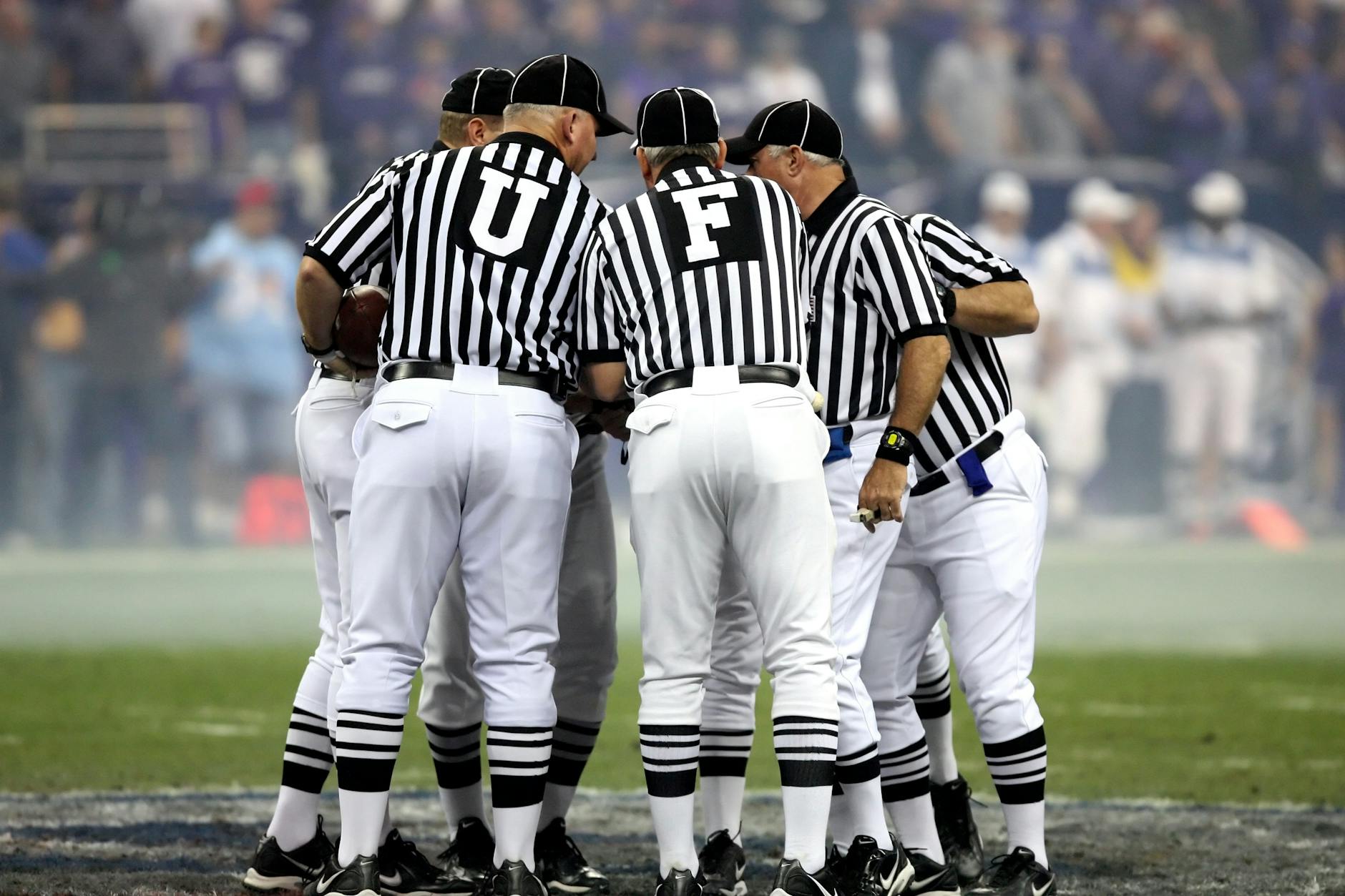
Photo by Pixabay on Pexels
“Football is an art, but officiating is an exercise in disciplined judgment.” That principle matters because VAR was never designed to turn every foul into a courtroom drama. It is a safety net for decisive mistakes, not a remote control operated by angry supporters who have just discovered slow motion.
Want a clearer guide to major tournament decisions? Coach’s Corner tracks FIFA World Cup tactics, predictions, player statistics, and officiating developments for supporters preparing for the 2026 tournament.
Step 1: What does VAR check?
VAR checks goals and no-goal decisions, penalty and no-penalty decisions, direct red-card incidents, and mistaken identity. It does not generally review ordinary yellow cards, routine fouls, throw-ins, or every disputed challenge. The threshold is a “clear and obvious error” or a “serious missed incident” under the IFAB protocol.
The first important point is that VAR is not a second referee replacing the match official. The Video Assistant Referee is an appointed match official with independent access to match footage, while the referee remains responsible for the decision on the pitch. According to IFAB’s official VAR protocol, “the final decision is always taken by the referee,” whether the referee accepts information from the VAR or conducts an on-field review.
The four review categories work as follows:
- Goal or no goal: VAR can inspect offside, handball, fouls, or other infringements during the attacking phase before a goal.
- Penalty or no penalty: VAR checks whether a penalty-area offence occurred and whether the referee’s original call was materially wrong.
- Direct red card: VAR may intervene for serious foul play, violent conduct, or another sending-off offence, but not normally for a clearly incorrect second yellow card.
- Mistaken identity: VAR helps establish which player committed the offence when the wrong player was cautioned or sent off.
A review can also identify misconduct after the incident, but it cannot endlessly reopen settled play. Once the match has restarted, review powers are sharply restricted, with narrow exceptions such as mistaken identity or certain violent conduct offences.
To understand the terminology before studying match examples, consult our [Internal Link: beginner’s guide to football officiating].
Step 2: How does VAR inspect an incident?
VAR inspects an incident through a structured sequence: automatic checking, incident identification, evidence review, referee communication, and final decision. The VAR and assistant VAR examine available camera angles in the VOR while the referee either accepts the recommendation or views the replay personally.
Every reviewable situation is checked automatically, even if the referee does not request help. That matters because players cannot demand a review, coaches cannot press an official’s imaginary button, and supporters cannot create jurisdiction by shouting “VAR” at the fourth official. The VAR may recommend a review, but only the referee can initiate it under the protocol.
The normal process looks like this:
- The referee makes an initial decision or allows play to continue.
- VAR checks relevant footage, including the point at which the attacking phase began.
- If no clear error or serious missed incident exists, VAR confirms the decision and play continues.
- If intervention may be justified, VAR communicates the factual findings to the referee.
- The referee either accepts the information for a factual decision or performs an on-field review.
- The referee announces the final outcome through a signal, restart, card, penalty, or goal decision.
Technology supports the review, but context still matters. A slow-motion replay can make ordinary contact appear vicious, while a wide-angle view may show that the defender played the ball cleanly. It is worth noting that the best evidence is not always the most dramatic angle; the key is whether the footage proves a relevant error under the Laws of the Game.
After 30-plus matches watched closely across domestic competitions and international tournaments, the recurring pattern is obvious: delays usually come from collecting the correct sequence, not from the referee being unable to find the replay button. That distinction is lost whenever television producers replay the same collision 14 times and call the resulting confusion “analysis.”
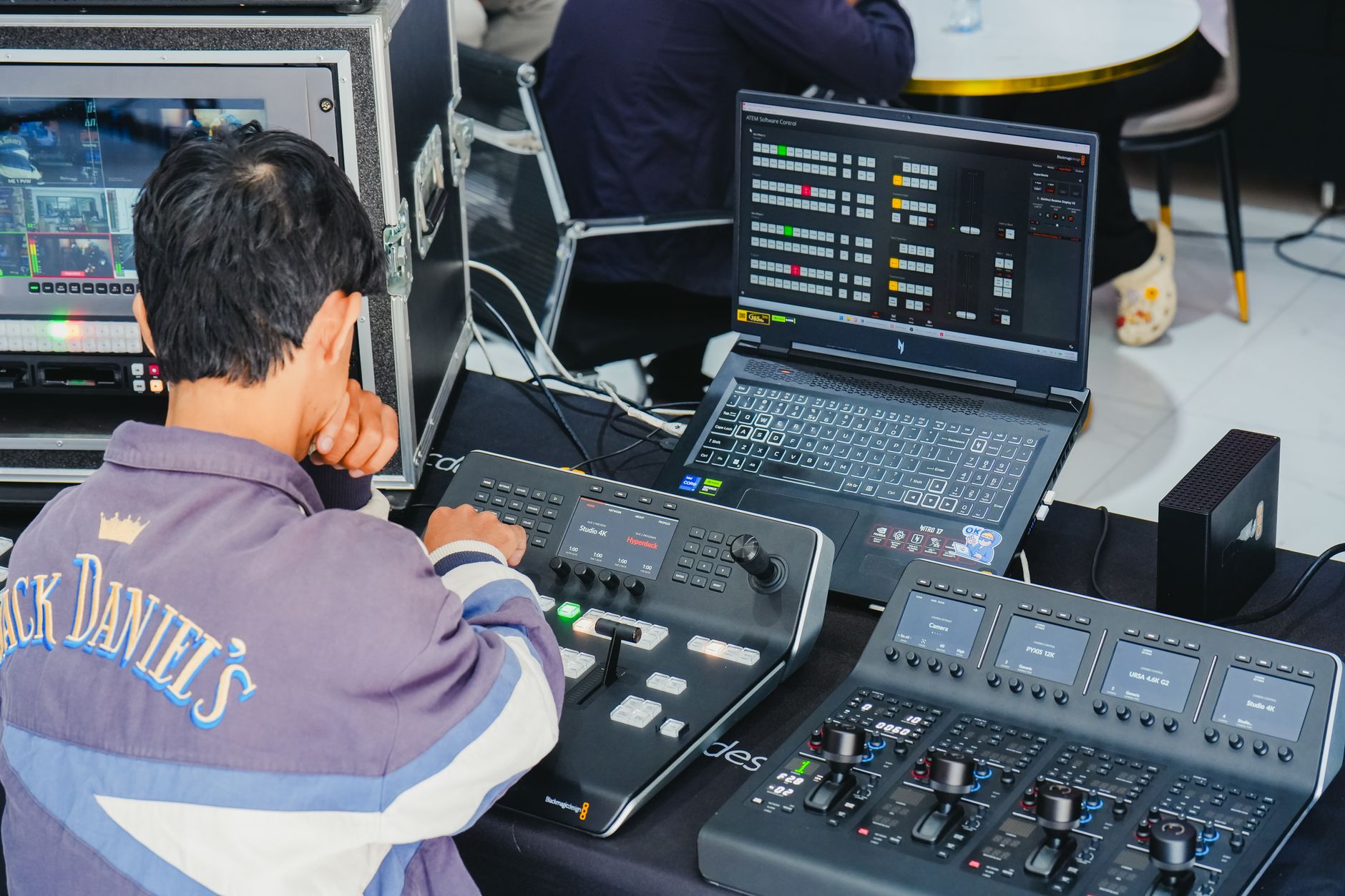
Photo by Sinan KRIYA on Pexels
Step 3: How are offside and goal decisions verified?
Offside and goal decisions are verified by reconstructing the attacking phase, selecting the correct body parts and moment of the pass, and checking whether the ball fully crossed the goal line. Semi-automated offside technology can accelerate this process, but VAR officials still interpret legal body positions and potential interfering actions.
For offside, the system must answer several separate questions:
- When exactly did the teammate play or touch the ball?
- Which attacking body part was closest to the goal line and legally capable of scoring?
- Was the player in an offside position?
- Did that player interfere with an opponent or gain an advantage?
- Was there a deliberate play by a defender that reset the phase?
A hand or arm is not used to determine an offside position because it cannot legally score. Feet, head, body, and other eligible parts may matter. The famous computer-generated lines are therefore not the whole decision; they illustrate a conclusion based on a selected frame and the Laws of the Game. If the selected frame is wrong, even a beautiful line is merely a precise answer to the wrong question.
Goal-line technology is different. It is designed to determine whether the entire ball crossed the goal line, often transmitting an immediate signal to the referee’s watch. VAR may then review related events, such as an earlier offside, foul, or handball. A ball crossing the line does not automatically mean the goal stands if an earlier infringement invalidated the attacking phase.
FIFA introduced semi-automated offside technology at the 2022 World Cup in Qatar, using limb-tracking data and a connected match ball. The system helped officials identify relevant positions faster, but it did not remove human judgment. Anyone promising that VAR eliminates all interpretation is selling certainty by the bucket. Football laws contain judgment because football contains people.
For more context, explore our [Internal Link: FIFA World Cup technology and match-analysis guide].
Step 4: Why does the referee sometimes watch the screen?
The referee watches the screen when the decision requires subjective interpretation, such as whether contact is a penalty, whether a tackle is serious foul play, or whether a handball offence occurred. For factual questions, such as certain offside positions or ball-out incidents, the referee may rely on VAR information without an on-field review.
An on-field review is therefore not proof that the original decision was incompetent. It means the referee must personally evaluate a subjective judgment after receiving relevant footage. The process is deliberately visible: the referee should remain observable while reviewing, and the final decision is communicated publicly to players and spectators.
This distinction separates factual reviews from judgment reviews:
- Factual review: Was the attacker offside? Did the ball cross the line? Was the wrong player identified?
- Subjective review: Was the challenge reckless enough for a red card? Did the contact meet the threshold for a penalty? Was the hand position punishable?
- Protocol review: Did the incident fall within a legal review window, or had play already restarted?
The referee does not need to agree with the VAR. In fact, independent judgment is the point. If every recommendation automatically became the outcome, football would have replaced one visible official with an invisible bureaucracy and called the downgrade progress.
A useful viewing habit is to separate “the evidence changed” from “the referee changed their mind.” Sometimes the replay reveals a factual error. Sometimes it confirms that reasonable people can see the same contact differently. VAR corrects clear mistakes; it does not promise that every supporter will receive the emotional ending they ordered.
Interested in how officiating affects match predictions and tactical reading? Coach’s Corner connects referee decisions with tournament context, team shape, and player discipline.

Photo by Anh Lee on Pexels
Step 5: verification
Verification means checking the incident category, replay evidence, review threshold, restart point, and referee’s final signal before deciding whether VAR operated correctly. A loud stadium reaction, television graphic, or social-media clip is not verification; it is frequently just noise wearing a scarf.
The most reliable verification checklist is:
- Identify the category: goal, penalty, direct red card, or mistaken identity.
- Locate the decisive moment: pass, tackle, hand contact, collision, or ball crossing.
- Check the complete phase: do not judge a goal from the final kick alone.
- Confirm the threshold: was there a clear and obvious error or serious missed incident?
- Check the final ruling: the referee’s signal and restart determine the official outcome.
- Review competition rules: implementation details can vary between FIFA, UEFA, and domestic competitions.
One underappreciated detail is the review window. VAR cannot treat the whole match as an open investigation. For a goal, officials examine the attacking phase leading to it; for a penalty, they focus on the relevant offence and its immediate context. After play restarts, most reviews are barred, which protects the match from becoming a sequence of historical appeals.
Another practical insight is that review length does not have a universal maximum. IFAB states that there is no time limit where accuracy requires further examination. However, this does not mean officials can wander through every camera angle forever. The incident must remain within the permitted category and review period, and the evidence must be relevant.
The best post-match analysis therefore asks, “What did the protocol allow, and what did the footage establish?” It does not ask whether a striker looked offended enough to deserve justice. Footballers have perfected that face; it is not an evidentiary standard.
Read our [Internal Link: advanced match-analysis and prediction methods] before evaluating a controversial World Cup decision.
Troubleshooting common failures
Most VAR frustrations come from misunderstanding its authority, review threshold, or technology rather than from the system failing technically. Common problems include delayed communication, confusing graphics, incomplete replays, inconsistent intervention standards, and disagreement over subjective fouls. The solution is to separate a genuine protocol failure from a decision that simply feels wrong.
Why does VAR take so long?
VAR takes time when officials must reconstruct a phase, compare several angles, verify the frame of contact, and communicate a legally defensible recommendation. Offside checks can involve the pass moment, player positions, and possible interference, while penalty reviews require judgment about force, intent, and consequence. Slow-motion footage can also exaggerate contact, so officials may compare normal-speed and slowed views before deciding.
A useful operational observation is that the visible review is only part of the work. The VAR may check footage before the referee walks to the monitor, meaning the audience sees a final verification stage rather than the entire investigation. Broadcast directors also control which images viewers receive, so a short television segment does not necessarily represent a short review.
Why is VAR sometimes inconsistent?
VAR can appear inconsistent because subjective decisions involve different incidents, angles, match contexts, and refereeing interpretations. The “clear and obvious error” threshold is intentionally higher than “I would have called that differently.” Two similar-looking challenges may differ in speed, point of contact, exposed studs, control, or consequence.
Consistency improves when competitions use clear referee guidance, calibrated technology, and post-match instruction. It cannot mean identical outcomes for every collision, because the Laws of the Game assess the details of each event. The stubborn truth is that VAR reduces some errors while making disagreements more visible; anyone promising perfect consistency is confusing marketing with officiating.
Can players or coaches request a VAR review?
Players and coaches cannot formally request a VAR review because the system automatically checks eligible incidents. They may communicate concerns, but surrounding the referee or attempting to influence the review process can itself lead to disciplinary action.
The referee must make an initial decision, and the VAR can recommend a review only within the protocol. This design prevents tactical delay, mass lobbying, and the deeply embarrassing spectacle of a bench trying to litigate a tackle through interpretive hand gestures. The final authority remains with the referee.
What happens if play has restarted?
If play has restarted, the referee normally cannot conduct a review, except for limited situations such as mistaken identity or certain sending-off offences involving violent conduct, biting, spitting, or extremely offensive, insulting, or abusive actions. This restriction protects the integrity of restarts and prevents endless retroactive appeals.
The rule also explains why timing matters. A team may protest immediately after an incident, but a later discovery does not automatically reopen the decision. Supporters should therefore pay attention to whether play continued, stopped, or restarted before evaluating the review’s legality.
What are VAR’s main advantages and disadvantages?
VAR’s principal advantage is correcting high-impact mistakes that can decide a match, especially an incorrectly awarded goal, penalty, or red card. Its disadvantages include delays, reduced spontaneous celebration, confusion over subjective thresholds, and the possibility that supporters interpret every stoppage as a scandal.
A balanced assessment looks like this:
- Advantages: greater factual accuracy, correction of mistaken identity, support for serious disciplinary decisions, improved goal and offside verification.
- Disadvantages: interruptions, emotional uncertainty, technical dependence, inconsistent public understanding, and continued disagreement over judgment calls.
- Best use: decisive, evidence-based intervention in narrowly defined categories.
- Worst use: treating every ordinary foul as a potential legal appeal.
The European sports conversation around VAR often cites UEFA guidance alongside IFAB Laws of the Game. FIFA competitions also publish tournament-specific technology and officiating information. These sources are more reliable than clipped videos accompanied by 400 comments beginning with “I played Sunday league, so…”
If you want practical tournament context rather than outrage assembled from fragments, Coach’s Corner provides daily FIFA World Cup coverage, match predictions, tactical analysis, and player-stat updates.
Frequently Asked Questions
Q: What is VAR in football?
A: VAR is a video officiating system that assists the referee with goals, penalties, direct red cards, and mistaken identity. A Video Assistant Referee checks eligible incidents using match footage from the VOR and recommends intervention only for a clear and obvious error or serious missed incident. The on-field referee always makes the final decision, either using the information provided or conducting an on-field review. VAR is therefore an officiating aid, not an independent replacement for the referee.
Q: How does VAR work during a football match?
A: VAR automatically checks every reviewable incident, examines relevant camera angles, and communicates with the referee when intervention may be justified. The referee then confirms the factual information or reviews the footage at the pitch-side monitor for subjective decisions. The process covers the attacking phase before a goal, the relevant penalty incident, serious red-card offences, and mistaken identity. There is no universal time limit, although officials must stay within the permitted review category and period.
Q: What is the difference between VAR and an on-field review?
A: VAR is the remote checking process, while an on-field review is the referee’s personal inspection of replay footage at the stadium monitor. Factual decisions, such as certain offside determinations, may be handled through VAR information without a monitor visit. Subjective decisions, such as whether contact deserves a penalty or red card, commonly require the referee to watch the footage. In both cases, the referee—not the VAR—makes the final ruling.
Q: Why does VAR sometimes not overturn a referee’s decision?
A: VAR does not overturn a decision when the footage fails to prove a clear and obvious error or serious missed incident. The original decision remains in place if reasonable interpretation is possible, even when another referee or supporter would have chosen differently. This threshold prevents VAR from becoming a constant re-refereeing service for ordinary judgment calls. The review must also concern one of the four permitted categories.
Q: Can VAR review every foul or yellow card?
A: VAR cannot review every foul or ordinary yellow card because its authority is limited to four categories. It can examine incidents connected with a goal, penalty, direct red card, or mistaken identity, subject to the protocol. A clearly incorrect second yellow card is generally outside the VAR review scope, although a direct-red-card offence may be reviewed. This narrow design reduces interruptions and preserves the referee’s authority over routine match management.
Q: Does VAR cost clubs or fans extra money?
A: Fans do not pay a separate VAR charge at the stadium, but competitions and leagues must fund cameras, replay systems, calibrated technology, officials, operators, and training. Costs vary significantly by competition level, venue, and technology package, so FIFA World Cup implementation cannot be treated as the price for a lower-division match. Goal-line technology and semi-automated offside tools can require additional infrastructure. The practical effect for viewers is usually indirect through competition budgets and broadcast operations.
Q: What should I do when a VAR decision appears wrong?
A: First identify the review category, then watch the complete phase and determine whether the evidence meets the clear-and-obvious-error threshold. Check whether play had restarted, whether the incident involved a factual or subjective judgment, and what final signal the referee gave. Reliable explanations should come from IFAB, FIFA, UEFA, or the competition organiser rather than edited social-media clips. If the evidence remains genuinely debatable, the decision may be a lawful judgment call rather than a VAR failure.
The key conclusion is not glamorous, but it is accurate: VAR makes football more reviewable, not perfectly agreeable. It catches major factual errors, narrows the damage caused by mistaken identity, and gives referees better evidence in decisive moments. It also slows celebrations and exposes the uncomfortable truth that many incidents cannot be reduced to one magical camera angle. Judge the system by its protocol, evidence, and final decision—not by whether it rescued your prediction.
Want to follow the 2026 FIFA World Cup with sharper tactical and officiating insight?